“Your price should reflect the relief your buyer feels when their problem is finally solved, not the hours you worked.”
Quick answer
Avoid setting prices simply by averaging out what local competitors charge on their public websites.
You have spent weeks building something you care about, but now you are staring at a blank checkout page wondering what number to type into the price box. Pick a number too high, and you worry nobody will buy; pick a number too low, and you risk exhausting yourself for very little return. Knowing how to price an offer is one of the most common stumbling blocks for any business owner. In this guide, you will learn a straightforward way to calculate your price based on customer value, present it clearly, and test it with confidence.
The Danger of Copying Competitor Numbers
When people sit down to decide on a price, their first instinct is usually to check what three or four other people in their field charge and pick an average number in the middle. While looking at the market gives you context, copying another person's price tag often causes unseen problems. You do not know their business model, their profit margins, or whether their current pricing is actually working for them.
When you price solely based on what someone else charges, you also teach yourself to treat your work like a commodity. A commodity is a generic product that competes only on who can afford to be cheapest. Competing on being the cheapest option is exhausting because there is always someone willing to undercharge more than you. Your pricing needs to come from your specific solution, not a guess based on a stranger's website.
Base Your Price on the Outcome Instead of Time
Most of us were raised in an hourly work mindset where an hour of effort equals a set amount of compensation. In business, your customer does not purchase your hours; they purchase a result. If you help someone fix a painful problem in two hours instead of twenty, your service is actually more valuable to them, not less. Charging by the hour penalizes you for becoming faster and more skilled at what you do.
Think about conversion, which is the moment a visitor takes your desired action and becomes a paying buyer. A customer decides on conversion by comparing the size of their problem against the cost of your solution. If the problem costs them thousands of dollars in stress or lost time each year, a five-hundred-dollar solution feels fair. Shifting your mind from input to outcome gives you a logical foundation for your price.
How to Price an Offer Around a New Opportunity
When you present a solution as merely an improvement on what a buyer has already tried, they will naturally compare your price to whatever failed them in the past. If they bought a twenty-dollar book on productivity that did not help, and you offer an improved productivity checklist for fifty dollars, they will hesitate. They link your offer directly to their previous disappointment and resist the higher price.
Instead, frame your work as a new opportunity. A new opportunity introduces an entirely fresh vehicle or method for reaching their goal, making past comparisons irrelevant. When buyers realize they are trying an approach they have never tested before, their old price anchors disappear. They evaluate your offer on its own merits rather than measuring it against past purchases that left them frustrated.
A Simple Calculation to Find Your Starting Number
To illustrate how to determine a fair baseline, consider an example of a web designer building a customer intake system for small law offices. We will clearly label this scenario as an illustration to show the math in action. Suppose the lawyer currently loses three billable hours every week manually sorting email inquiries. Over a full year, those lost hours represent roughly twelve thousand dollars in wasted time and missed billings.
If the designer creates a streamlined intake system that recovers those hours, charging two thousand dollars is an easy decision for the lawyer. The price is less than a fifth of the financial waste the problem causes each year. When you calculate your own price, ask yourself what leaving the problem unsolved costs your ideal buyer over twelve months. Your starting price can comfortably sit at ten to twenty percent of that overall cost.
Presenting Your Value Through Clear Anchoring
Once you determine your number, you must show buyers why that number makes practical sense. This is where an offer stack comes in, which is the complete bundle of every item, training, template, and support channel included in your package. If you simply tell someone a single total without breaking down the deliverables, they struggle to picture what they receive.
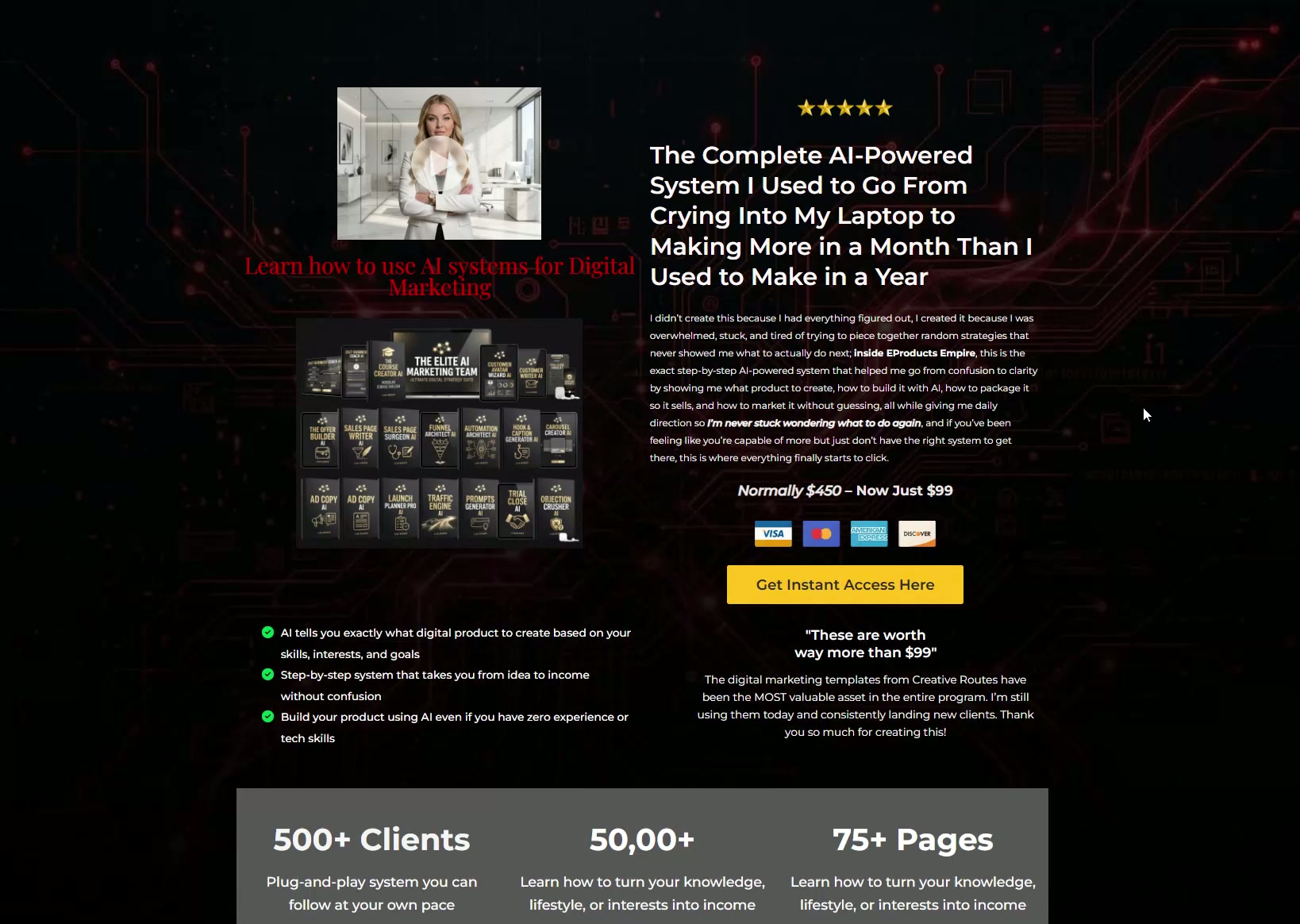
List each deliverable separately, describe the specific result it delivers, and place an honest replacement value beside it. When a buyer sees four distinct components that would individually cost fifteen hundred dollars to assemble, an asking price of four hundred dollars feels reasonable. Inside tools like OfferConverter AI, this principle is built directly into the blueprint generator so your sales copy automatically contrasts the true value against your final checkout price.
The Common Mistake of Discounting Too Quickly
A regular mistake new sellers make is dropping their price the moment their first few visitors do not buy. It is tempting to believe that nobody bought because the number was too high, but price is rarely the primary reason for slow initial sales. More often, the visitor simply did not understand what the offer would do for them, or they were not yet convinced that the method would work for their specific situation.
Before you reduce your price, review your marketing funnel, which is a series of connected web pages designed to guide a visitor toward a single purchase. Check if your headline is clear, verify that your checkout form functions properly, and see if you answered basic buyer questions. Lowering your price without fixing confusing messaging simply means you sell the same confusing offer for less money.
Preparing the Rest of Your Sales Journey
Selecting your price is only the first part of bringing an offer to market. Once your price is settled, you need to decide how people will discover your work and what happens if they do not buy right away. You will want a lead magnet, which is a helpful free resource given away in exchange for an email address, so you can gather contacts who are interested in your topic.
From there, you will need a nurture sequence, which is a series of automated emails sent to build trust and educate a new subscriber over several days. Setting your price gives you the target, but your messaging and follow-up emails are what carry your buyer across the finish line. The next natural step is learning how to present your newly priced offer in a structured sales presentation.
The short version
- Avoid setting prices simply by averaging out what local competitors charge on their public websites.
- Charge for the financial or personal value of the solved problem rather than the hours it takes you to deliver.
- Position your offer as a new opportunity so buyers do not compare your price to cheaper items that failed them.
- Price your solution at a modest fraction of what the ongoing problem costs your customer each year.
- Fix unclear messaging and technical issues in your funnel before you consider discounting your price.
Common questions
What is the best way to test if my offer price is too high?
Send a small group of qualified prospects through your sales page and observe their feedback. If people read your entire message, understand the outcome, but repeatedly cite the price as their only barrier, your price may need adjustment. If they leave without reading, your message is the issue, not the price.
Should I publish my price publicly or ask people to book a call?
If your offer is standardized and costs under a few thousand dollars, listing the price directly on your checkout page saves time for both sides. If your service requires custom scoping for each client, inviting prospects to a conversation first allows you to assess their needs before quoting.
How often should I raise the price of my offer?
Consider raising your price whenever you consistently deliver results and your capacity begins to fill. As client feedback refines your process and your confidence grows, bumping your price every few months helps align your fee with the real value you deliver.
Does offering a payment plan help improve sales conversions?
Yes. Splitting a single fee into two or three monthly payments lowers the immediate cash burden for your buyer. Just ensure your total split-payment price is slightly higher than the pay-in-full option to account for payment processing fees and administrative overhead.
What should I do if a prospect asks for a custom discount?
Rather than lowering your fee for the same scope of work, offer to remove a deliverable to meet their budget. This preserves the integrity of your pricing while still giving the customer an affordable path to work with you on a smaller project.
Turn Your Offer Into a Complete Sales System
Ready to launch your offer with confidence? Create a Free Starter Pass with OfferConverter AI to get 5 free AI credits and your first Conversion System with no card required at signup.
Free sample from 4 quick answers · plans from $49/month
About the author
Brittany Johnson
Brittany Johnson is the founder of OfferConverter AI. She builds conversion systems for coaches, course creators, and online sellers — and writes from what's working inside real offers, not theory.